
Top Flow VRF
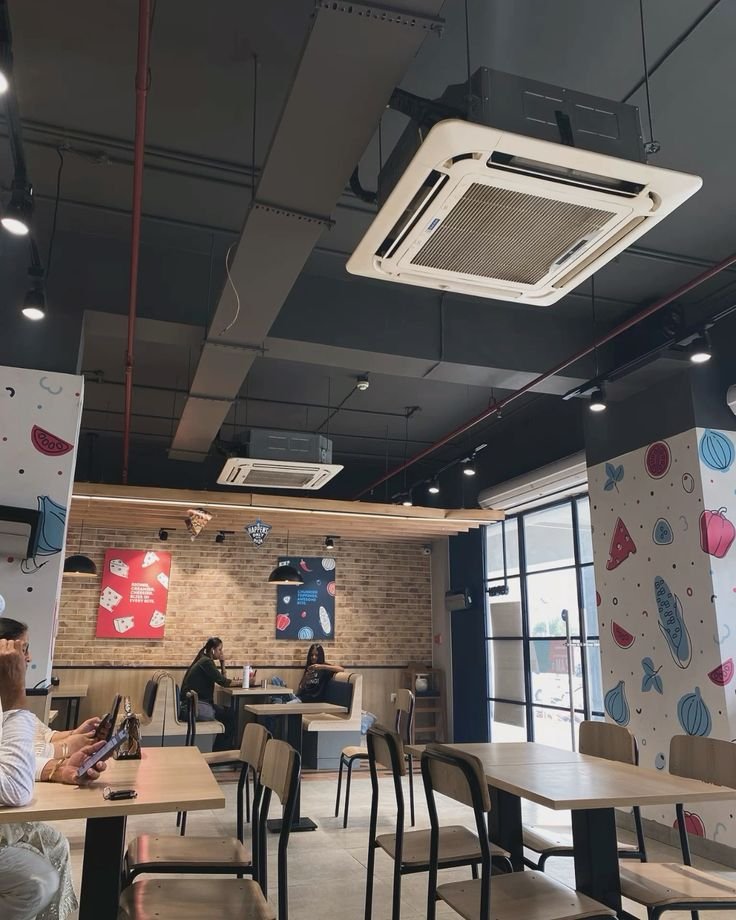
Ceiling concealed units with high-rise discharge, installed above the ceiling so all airflow is horizontal. The usual choice for large open floors.
Variable refrigerant flow systems for buildings that need real zoning, real efficiency and one system instead of many.
A VRF system is not simply a ductless split with a longer pipe. It is a genuinely variable system: outdoor units modulate their output continuously to match the actual load across every connected indoor unit, rather than switching between fixed steps.
For Kochi buildings — offices, clinics, hotels and high-rise floors — that makes VRF the right answer in three situations in particular: when there are many rooms with different usage patterns, when part-load running dominates the year, and when roof space for a row of separate outdoor units is genuinely limited. We design, install, commission and service VRF from Mitsubishi Electric, Daikin and Panasonic platforms.
Every indoor unit below runs on the same refrigerant circuit as the outdoor unit.
Ceiling concealed units with high-rise discharge, installed above the ceiling so all airflow is horizontal. The usual choice for large open floors.
Side-flow cassettes with modular capacity steps, giving a wider selection of sizes for mixed-occupancy floors.
Slim side-flow indoor units for corridors, small rooms and spaces with a limited ceiling void.
Fully ducted indoor units hidden in the false ceiling, with grille outlets as the only visible element.
Water-loop heat pump and heat recovery arrangements that recover heat from discharge air and reuse it for reheat or fresh supply.
Cassettes, ducted, floor standing, ceiling suspended and console indoor units, all on the same refrigerant circuit.
The choice depends on whether the building needs simultaneous heating and cooling, and on what the recovery is used for.
If you are not sure which of the three applies to your building, that is exactly what the load calculation is for. We will model it and show you the numbers.
The benefits that decide whether a VRF system is worth the extra specification effort.

The practical questions that come up in every VRF conversation.
Not necessarily, and not over its life. The equipment cost is higher, but a VRF system on a single circuit reduces pipework and outdoor unit count, and the part-load efficiency gain is usually significant on a building that is rarely at full load. We will show you the running cost comparison for your specific building rather than making a general claim.
VRF is the Daikin trade name for variable refrigerant flow. VRV is Mitsubishi Electric's name for the same technology. Different manufacturers use different names, but the underlying principle — continuously variable capacity on a shared refrigerant circuit — is the same.
It depends entirely on the building. A single-floor fit-out with a straightforward pipe route is relatively quick. A live high-rise with phased floor-by-floor working runs across weeks, and we will lay out the programme in the quotation.
Yes, provided the original design allowed for it. We size the outdoor units and branch controllers with a sensible margin, and we document the spare capacity so any future extension is straightforward rather than a redesign.
We do, and we would rather you asked us before anything else is involved. VRF controls and refrigerant circuits need technicians trained on that specific platform; a general repair callout can leave you worse off. Our annual maintenance contract covers fault diagnosis, refrigerant checks, coil cleaning and control system verification.
Send us the floor plan or room schedule. We will calculate the design load room by room and propose a properly sized VRF system in writing.